Free Mini Skirt Sewing Pattern with No Waistband
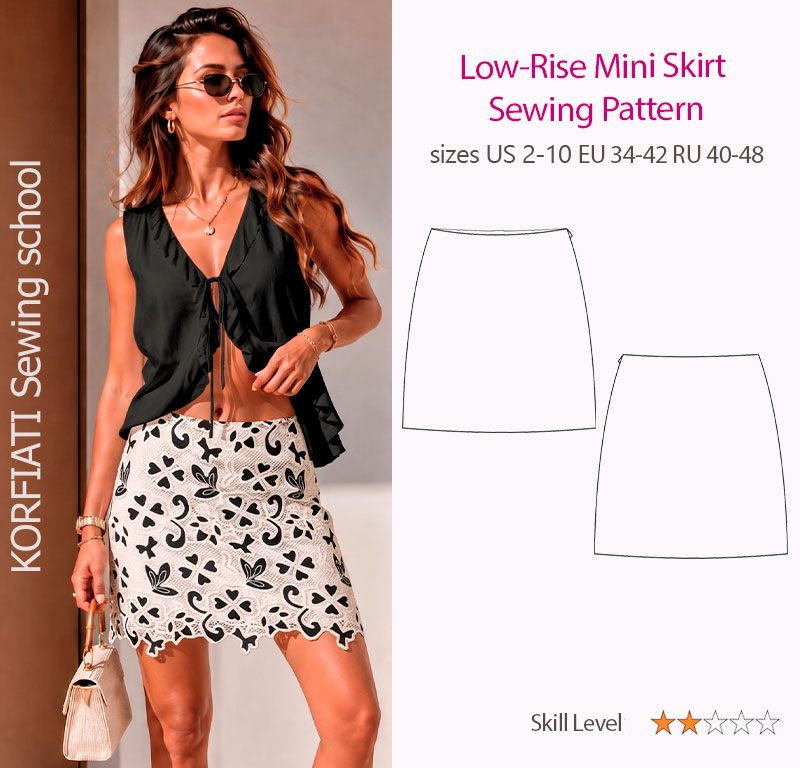
Looking for a quick sewing project with maximum impact? This low-rise mini skirt shows how a simple design can still make a stylish statement. With no waistband, no darts, and just a few pattern pieces, it comes together surprisingly fast while delivering a polished, high-end finish, designer-inspired look.
The secret is in the fabric. Made from firm cotton lace and fully lined for comfort, this skirt combines clean lines with elegant texture. The scalloped lace edge creates a beautiful finished hem, eliminating the need for traditional hemming and making construction even easier.
To help you get started right away, we’ve prepared the pattern in five standard sizes, from US 2 (EU 40) to US 10 (EU 48). In this tutorial, you’ll find the downloadable pattern along with step-by-step sewing instructions to guide you through the entire process.
Whether paired with a crisp white blouse, a fitted top, or an oversized shirt, this versatile mini skirt is sure to become a favorite in your handmade wardrobe.
To contents ▴Design Features
Despite its simplicity, this skirt has plenty of character. The low-rise waistline sits 4 cm (1 5/8″) below the natural waist, while the gently flared silhouette creates a flattering shape. The decorative scalloped edge of the lace forms the hemline, so no hemming is required.
Construction is refreshingly simple: just two side seams, an invisible zipper, and a lining. Yet the finished skirt looks sophisticated and elegant thanks to the texture and structure of the lace fabric.

A mini skirt styled with a sleeveless blouse
The skirt pairs beautifully with both a black blouse and a crisp white shirt, making it easy to style for different occasions.

An example of styling a mini skirt with a ruffled blouse
Pattern Highlights:
- Waistline positioned 4 cm (1 5/8″) below the natural waist.
- Finished length approximately 47 cm (18 1/2″).
- No waistband.
- Gently flared silhouette.
- Invisible zipper in the left side seam.
- Scalloped lace edge eliminates the need for hemming.
- Fully lined for comfort and coverage.
Skirt sketch: front and back views are shown in Fig. 1.
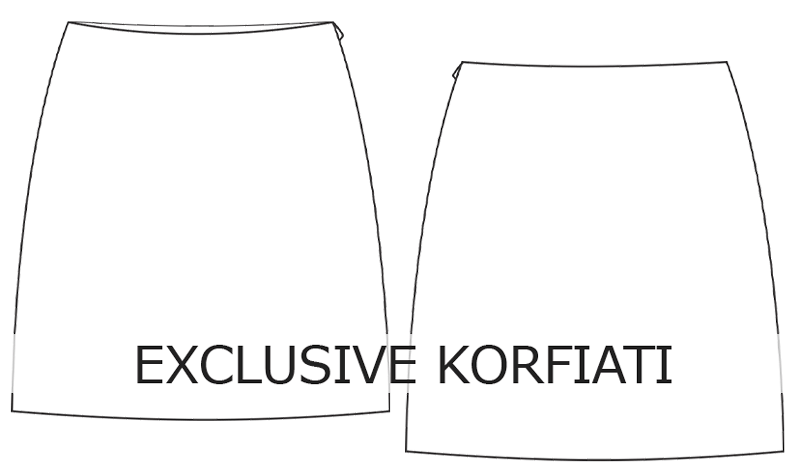
Fig. 1. Skirt sketch: front and back views
Designer Tip: If you’re using a lace fabric with minimal transparency, you can skip the lining altogether.
To contents ▴Download & Print the Pattern
The finished skirt measures approximately 47 cm (18 1/2″) in length. The pattern is available in five standard sizes, from US 2 to US 10 (EU 34 to EU 42).
The PDF pattern includes two printing options: a copy-shop version for large-format printing and a tiled A4 version for home printing. The A4 pages can be assembled using the registration marks provided.
To ensure accurate printing, check the included 100 × 100 mm (3 15/16″× 3 15/16″) test square before cutting your pattern. The pattern sheet is shown in Fig. 2.

Fig. 2. Pattern Sheet
Select your size from the size table (Fig. 3).

Fig. 3. Table of basic measurements for sizes US 2-10 (EU 34-42)
Important: Seam allowances and hem allowances are not included in the pattern.
To download the pattern, click the icon below.
To contents ▴Cutting Instructions
Select the pattern pieces for your size and cut them out along the corresponding cutting lines. Note the difference between the outer skirt and lining pattern pieces – the lining hemline is shorter than the skirt hemline (Fig. 4).

Fig. 4. Low-Rise Mini Skirt Pattern – Cutting Layout
The sample skirt shown in this tutorial was made from firm cotton lace and fully lined with knit lining fabric. We recommend sewing the garment on a sewing machine and finishing the seam allowances with an overlocker (serger) during construction.
To contents ▴Materials & Notions
- 0.55 m (21 5/8″) of lace fabric, at least 120 cm (47 1/4″) wide;
- 0.45 m (17 3/4″) of viscose jersey, 145 cm (57″) wide;
- One 18 cm (7″) invisible zipper;
- Madeira Aerofil № 120 sewing thread and Madeira Aerolock (Ferolock) № 125 overlock thread.

Fig. 5. Materials & Notions
Recommended Fabrics
For this skirt, choose a structured lace fabric or any skirt-weight fabric with good body, such as crepe, piqué, cotton, or similar materials. For the lining, we recommend a lightweight viscose jersey.
Important! When cutting lace, position all pattern pieces in the same direction and align the scalloped edge of the lace with the hemline of each pattern piece.
Cut the following pieces from the lace fabric (Fig. 4):
- 01 Back Skirt – cut 1 on fold
- 02 Front Skirt – cut 1 on fold.
Outer skirt seam allowances: Add 1.5 cm (5/8″) seam allowances to all edges except the hemline.
Cut the following pieces from the knit lining fabric:
- Back Lining – cut 1 on fold
- Front Lining – cut 1 on fold.
Lining seam allowances: Add 1 cm (3/8″) seam allowances to the side seams and a 2 cm (3/4″) hem allowance along the lower edge.
To contents ▴How to Sew the Waistband-Free Mini Skirt
To sew the skirt, you will need the following equipment:
- Sewing machine
- Overlocker (serger) for seam finishing.
Construction: Join the right side seams of both the lace skirt and lining pieces using a 4-thread overlock stitch.

Fig. 6. Sewing the Right Side Seam on the Overlocker
Important! Because lace fabrics have an open mesh structure, the seam allowances of the lining may be visible through the lace. To prevent this, place the wrong side of the lace skirt against the right side of the lining.
- Finish the lower edge of the lining with an overlock stitch, turn up the hem, and topstitch using a twin needle.
- Match the upper edges of the skirt and lining and sew them together using a 4-thread overlock stitch, trimming away excess seam allowance as you sew.
- Press the seam allowance upward and edge-stitch close to the seam to keep the lining in place (Fig. 7).

Fig. 7. Edge-Stitching to Secure the Lining Along the Upper Edge
- Turn the lining to the inside of the skirt. Match the side seams of the skirt and lining and overlock them together. From this point on, treat the skirt and lining as a single layer.
- Insert the invisible zipper into the left side seam. Stitch the remainder of the seam below the zipper on the sewing machine (Fig. 8).

Fig. 8. Sewing the Lower Section of the Left Side Seam
- Fold the upper ends of the zipper tape under the seam allowances and secure them with short machine stitches (Fig. 9).
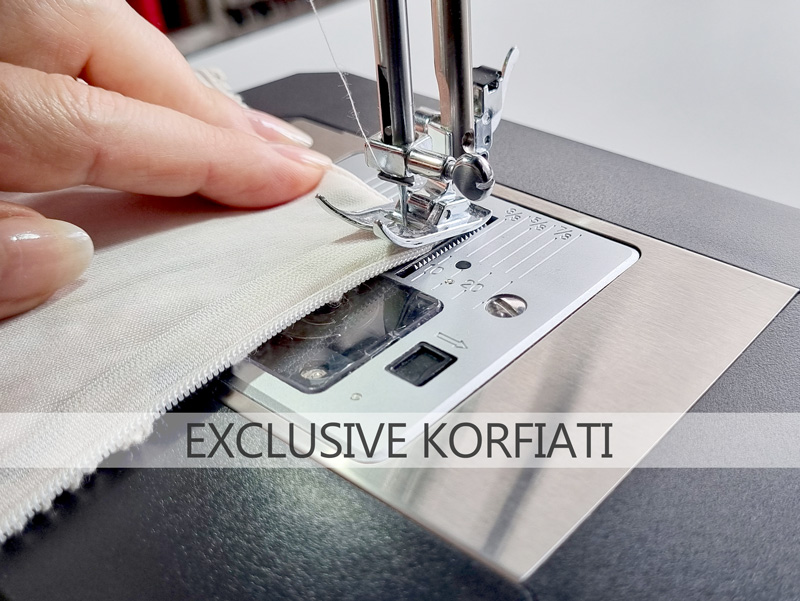
Fig. 9. Securing the Seam Allowances at the Top of the Zipper
Your skirt is finished! We hope you enjoy sewing and wearing your new skirt. For more sewing patterns, tutorials, and creative sewing ideas, visit the Anastasia Korfiati School of Sewing and subscribe to our free lessons.


Hello! Is there a way to draft or model this skirt starting from a dress sloper? I need one made precisely to my measurements.
We will try to publish a post like that.