A practical guide to shirt and blouse anatomy, including collars, cuffs, yokes, sleeves, interfacing, and other essential construction details
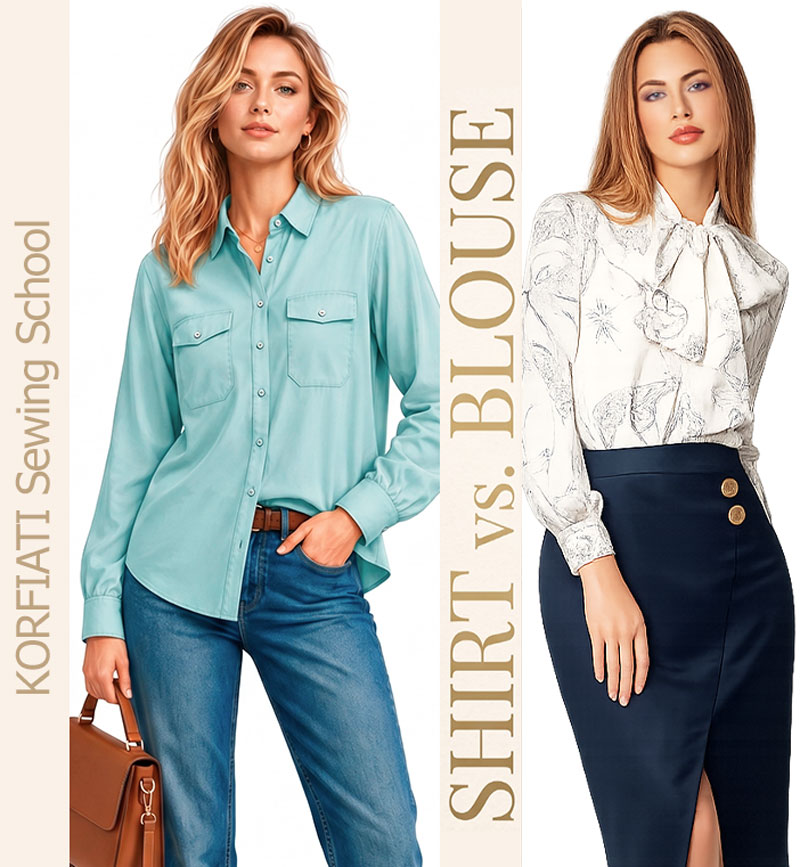
Blouses and shirts hold a special place in every modern woman’s wardrobe. It’s hard to imagine a closet without at least one of these versatile garments. Depending on the fabric, silhouette, and styling details, both blouses and shirts can create a wide range of looks – from polished business attire to soft, romantic outfits. They are also enjoyable and rewarding garments to sew.
In this article, we’ll take a closer look at the construction details of blouses and shirts, explore their defining characteristics, and discuss what sets them apart.
To contents ▴What Is a Blouse?
Traditionally, a blouse is defined as a women’s garment made from lightweight fabrics and designed with a softer, more feminine silhouette than a classic shirt. Most blouses feature sleeves, a collar, and cuffs, although modern designs vary widely. Some button up the front, while others are pull-on styles with an unbroken bodice, similar to a tunic.
Blouses often incorporate decorative elements such as jabots, ruffles, frills, lace trims, embroidery, and appliqué. Although blouse-like garments existed earlier, the blouse became firmly established in women’s fashion during the 19th century, when the bodice evolved into a separate garment and dresses gradually became divided into two-piece ensembles consisting of a blouse and a skirt.
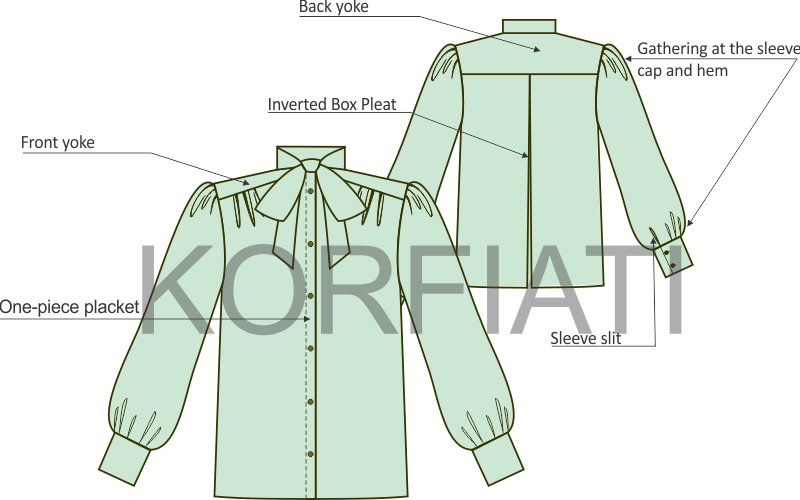
Fig. 1. Blouse sketch featuring a bow-tie collar
What Is a Shirt?
Historically, the shirt originated as a men’s undergarment worn beneath outer clothing. Over time, it evolved into a standalone garment, and by the mid-20th century it had become a wardrobe staple for both men and women.
A classic shirt typically includes several defining features: a front button placket, chest pocket(s), a collar with a collar stand, and cuffs. Most traditional shirts have a single chest pocket, while more casual styles may feature two. These characteristics apply to both men’s and women’s shirts, although women’s styles may incorporate subtle waist shaping for a more fitted silhouette.
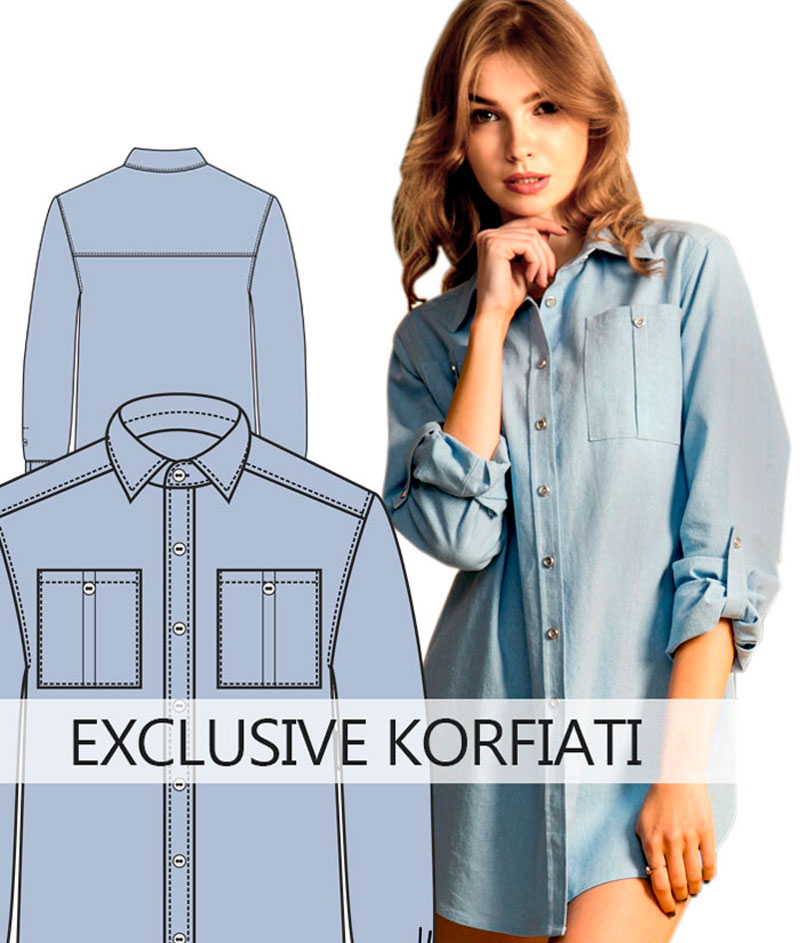
Fig. 2. Long shirtdress
Although shirts and blouses may appear similar at first glance, they differ significantly in both construction and design details.
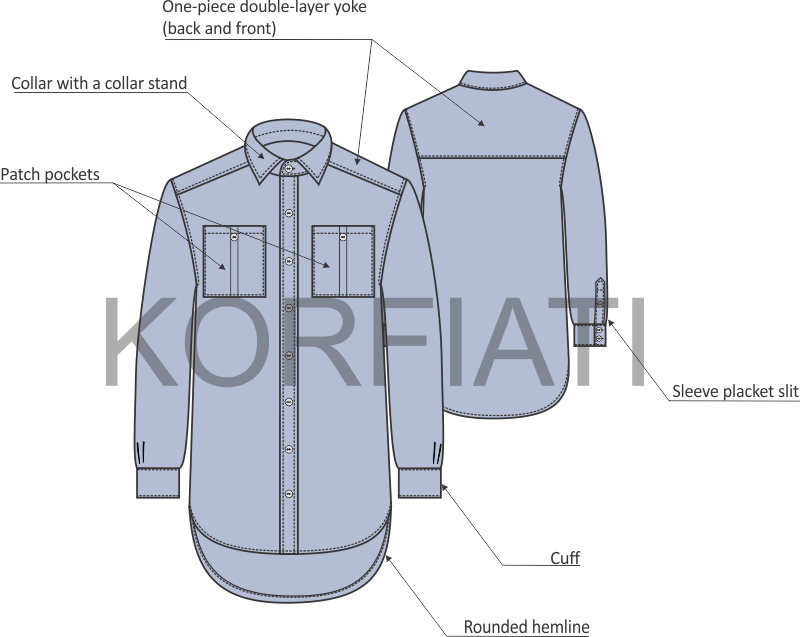
Fig. 3. Technical Features of a Classic Straight-Cut Shirt
Blouse Styles
A blouse offers a wide range of design possibilities. It may be fitted or loose-fitting, with or without a collar, and can include features such as draping, a peplum, a button-front closure, or no closure at all. Necklines vary endlessly, from clean and minimal to soft and decorative interpretations. Sleeve designs are virtually limitless, ranging from flutter sleeves and flounces to gathered and puff styles, as well as raglan and slim fitted silhouettes.
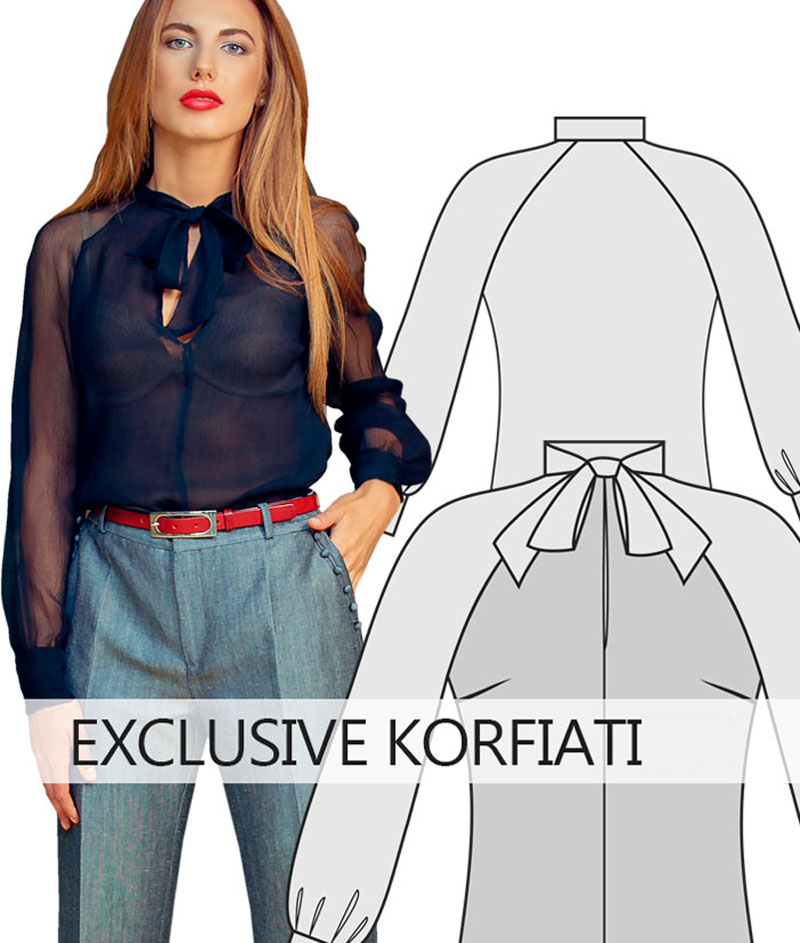
Fig. 4. Raglan-sleeve blouse
As mentioned earlier, decorative options for blouses are nearly limitless. Embroidery, appliqué, lace trims, ruffles, and jabots can all be used to create distinctive, one-of-a-kind designs.
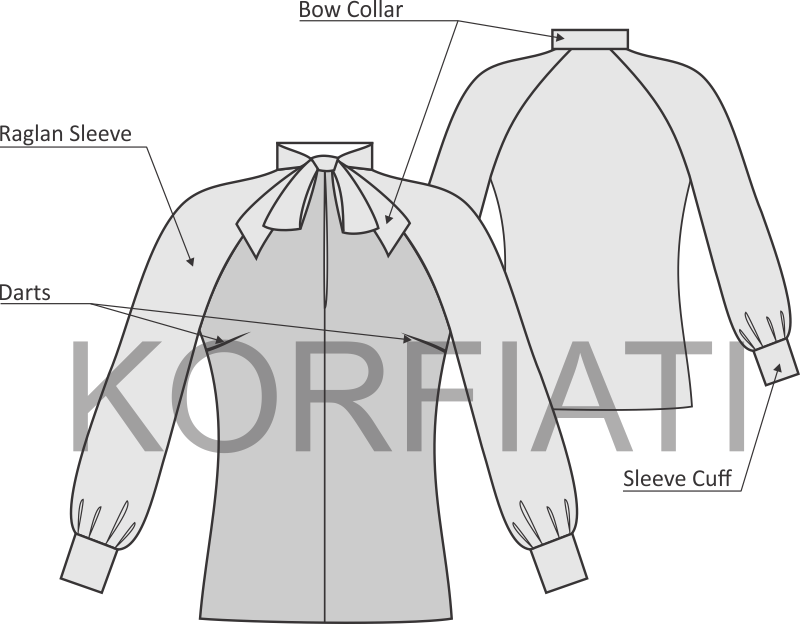
Fig. 5. Chiffon blouse sketch with raglan sleeves
Fabric selection for blouses is equally unrestricted. Lightweight chiffon, silk, rayon, cotton lawn, lace, sequined fabrics, and countless other materials can all be used successfully. A blouse provides an ideal canvas for creative expression.
Shirts, on the other hand, traditionally follow a more structured approach. Classic shirting fabrics are often solid-colored, striped, or plaid. However, contemporary fashion continues to redefine these conventions, and today’s designers frequently incorporate bold prints and unique patterns that move beyond traditional shirt styling.
To contents ▴Key Features of Shirts and Blouses
Let’s take a closer look at the individual pattern pieces and construction elements that make up a shirt. Most of these components are also found in blouses, although their number, shape, and configuration depend on the designer’s technical sketch and garment style.
Front. The front of a shirt is typically divided into two separate front sections joined by a center-front button closure (Fig. 6). In a blouse without a front opening, the front bodice is cut as a single piece and is referred to simply as the front.
Back. The back section of the garment is called the back (Fig. 6). It may be cut as a single piece or constructed with a yoke. A box pleat is often incorporated at the center back to provide additional ease and freedom of movement.
Yoke. The yoke is the upper section of the back or front bodice. Its lower edge may have various shapes depending on the design. In most shirts, the yoke is cut as a double layer for improved structure and a clean finish.
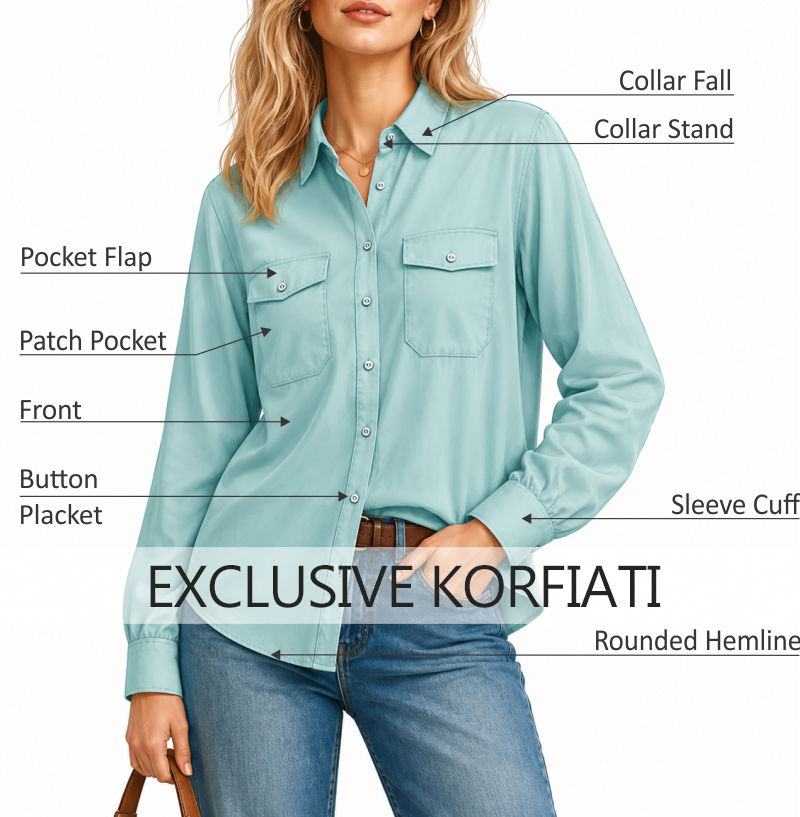
Fig. 6. Shirt Details – Front View
Sleeve. A classic shirt sleeve is generally straight and finished with a cuff at the lower edge. It is most commonly cut as a one-piece sleeve (single-seam sleeve), although two-piece sleeves are occasionally used.
Blouses, on the other hand, may feature sleeves of virtually any shape or length.
Cuff. The cuff is sewn to the lower edge of the sleeve. It is most commonly rectangular, but may also feature angled corners, rounded corners, or decorative shaped edges. Formal dress shirts often include French cuffs for cufflinks.
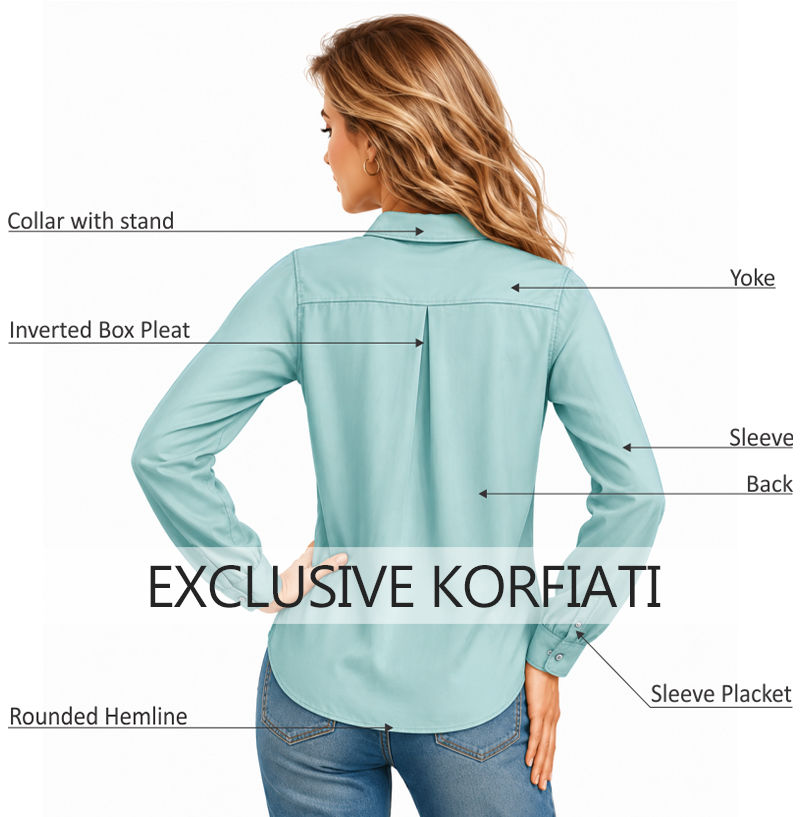
Fig. 7. Shirt Details – Back View
Blouse cuffs can be far more decorative and may incorporate embroidery, appliqué, lace, or other embellishments.
Collar. A classic shirt collar typically consists of two parts: the collar stand and the collar itself. In men’s tailoring, several construction methods are used, including collars with removable or sewn-in collar stays. Collar stays help maintain crisp collar points and improve shape retention, while collars without stays provide a softer appearance.
A blouse may be designed with or without a collar. Popular collar styles include bow-tie collars, cowl collars, shawl collars, and many other fashion variations.
Our goal is to provide practical sewing knowledge that you can apply in your own projects. Be sure to explore our detailed step-by-step shirt sewing tutorial, as well as our video lesson on constructing a collar with collar stays.
To contents ▴Which Shirt Parts Should Be Interfaced?
To stabilize the garment and improve durability, certain components are reinforced with fusible interfacing (shown in gray in Fig. 7). The weight and type of interfacing should be selected according to the fabric being used and the construction techniques chosen for the garment. We previously shared detailed guidelines for choosing interfacing materials.
The Following Components Are Typically Interfaced:
- The outer collar piece
- The inner collar stand
- The cuff pieces
- The front placket extension (in some cases when working with lightweight fabrics) (Fig. 8).
The same components are typically interfaced when constructing a blouse.
The cutting layout is shown in Fig. 8. The back piece and collar are placed on the fold. To finish the sleeve opening, cut two bias strips and two sleeve placket pieces. Add standard seam allowances of 1.5 cm (5/8 in) around all pattern pieces and 2 cm (3/4 in) hem allowance at the lower edge of the garment.
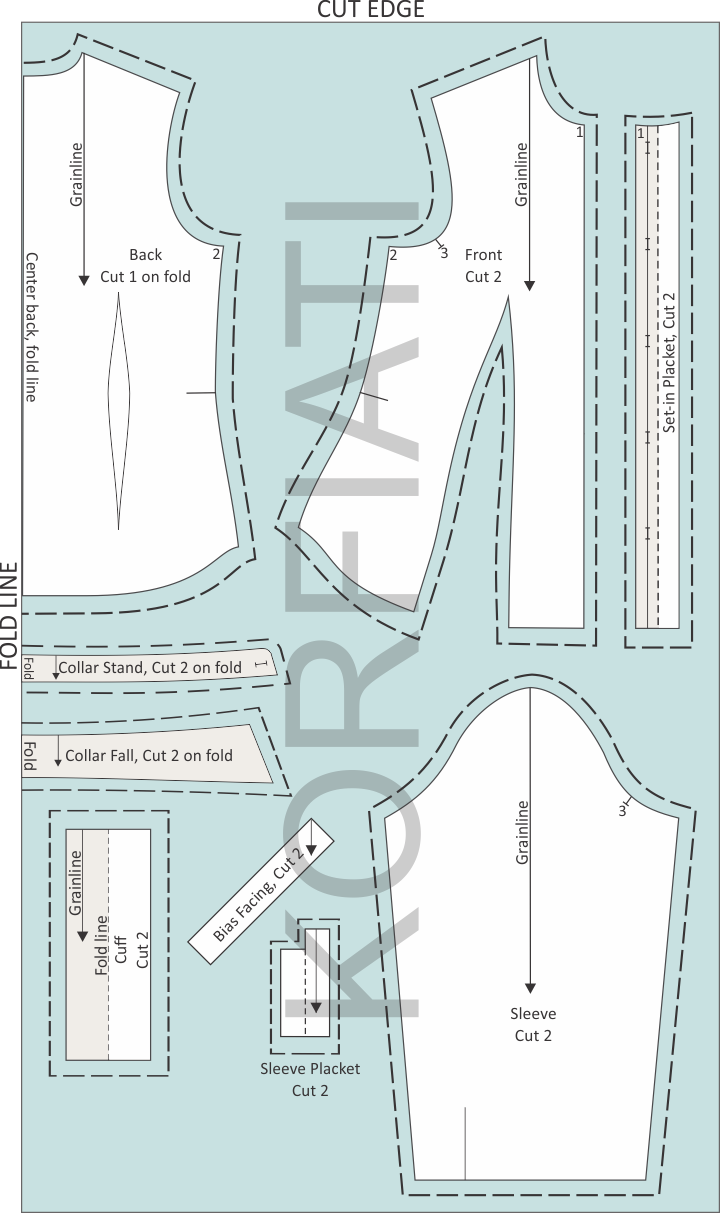
Fig. 8. Shirt pattern layout on fabric
For more sewing techniques, original patterns, and creative inspiration, visit the Anastasia Korfiati School of Sewing. Subscribe for free and be the first to receive new tutorials and sewing patterns.



No Comments