For Special Occasions! Sew a Chic Satin Bucket Bag with This Simple Pattern
Many makers focus so much on garments that they often overlook accessories like bags. But it’s the details that truly complete a look and unlock your creative potential. Today, we’re showing you how to sew a stunning satin bucket bag using a very simple pattern. If you love to experiment, jump right in – the results will exceed your expectations. Find the bucket bag pattern and tutorial below!
A Brief History. The bucket bag gets its name from its signature shape: a soft body with a circular base and a drawstring top that resembles a small bucket. The prototype for modern designs is believed to be the champagne carrier created by Louis Vuitton in the early 20th century. Over time, this practical accessory has evolved into a stylish wardrobe essential.
Today, the bucket bag remains a staple in the collections of leading fashion houses like Gucci, Prada, and Celine – ranging from minimalist styles to bold designer interpretations. Fashionistas love this bag for its versatility: whether crafted from faux leather, faux fur, or fabric, it effortlessly complements both casual outfits and elegant ensembles.
The bucket bag is the perfect accessory for parties and special events
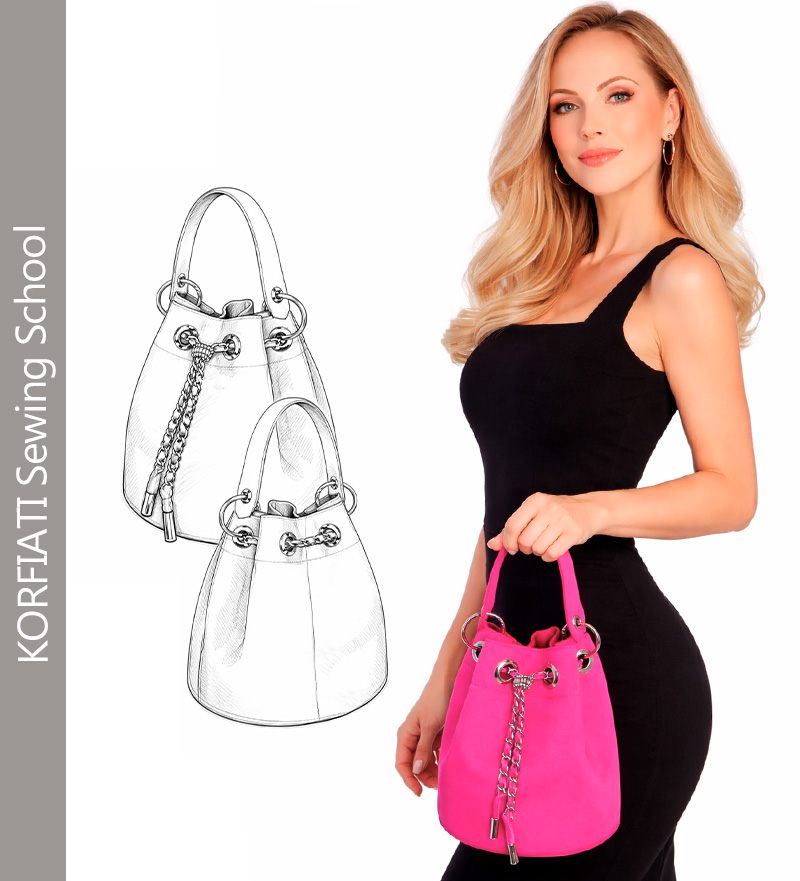
The bucket bag is also one of the most “beginner-friendly” models for DIY sewing. Its simple construction, minimal components, and material versatility make it an excellent project for both novices and experienced tailors. With a bit of imagination, you can create a unique accessory tailored to your style. Front and back sketches of the bucket bag are shown in Fig. 1.

Fig. 1. Front and back sketches of the bucket bag
Bucket Bag Pattern
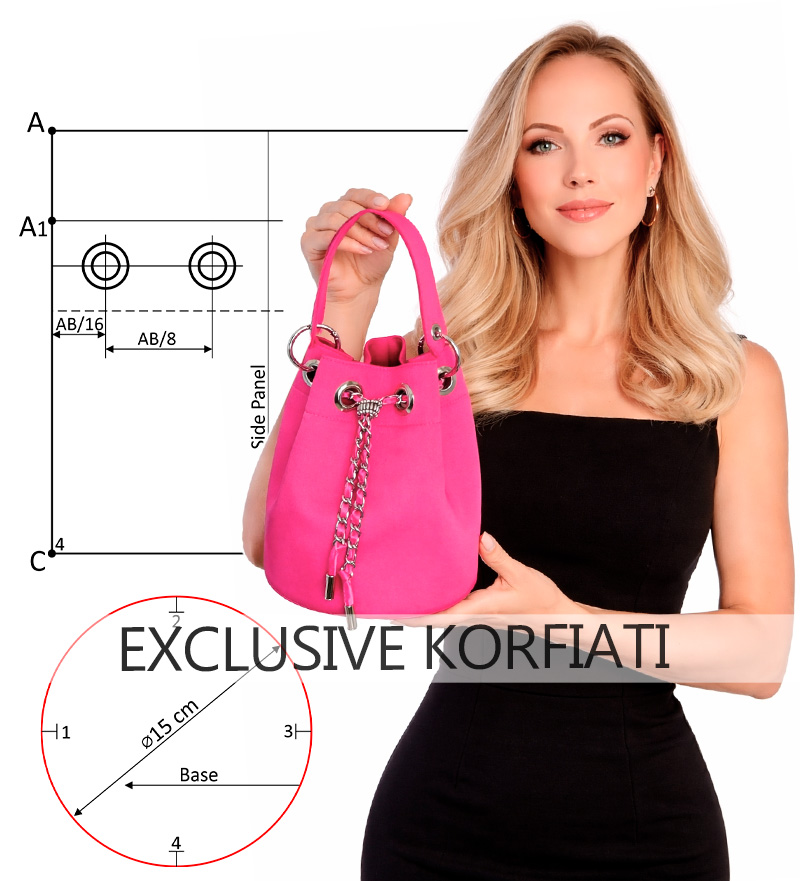
The finished dimensions of the bag are 15 cm x 16.5 cm. The pattern is very simple and can be drafted in just 15 minutes. You will need a ruler, a pencil, a compass, and pattern paper.
Drafting the Side Panel
Draw a rectangle ABCD with the following dimensions:
- AB = CD = 47.5 cm
- AC = BD = 21.5 cm
- AA1 = BB1 = 5 cm (integrated top edge facing).
Eyelet Placement. Mark the positions for eight eyelets (grommets) on the side panel draft. Eyelet diameters can range from 2 to 2.5 cm. Calculate the distance between the centers of the eyelets using the formula: AB / 8.
Divide the CD line into 4 equal parts and mark the notches (1-2-3-4) for matching with the bag base.
Drafting the Base
Using a compass, draw a circle with a diameter of 15 cm. Divide the circumference into 4 equal parts and mark the notches (1-2-3-4) for matching with the side panel.
Drafting the Handle
Draw a rectangle A2B2C2D2 measuring 29.5 cm x 4 cm. Follow the construction lines as shown in Fig. 2 and mark the eyelet positions on the handle.
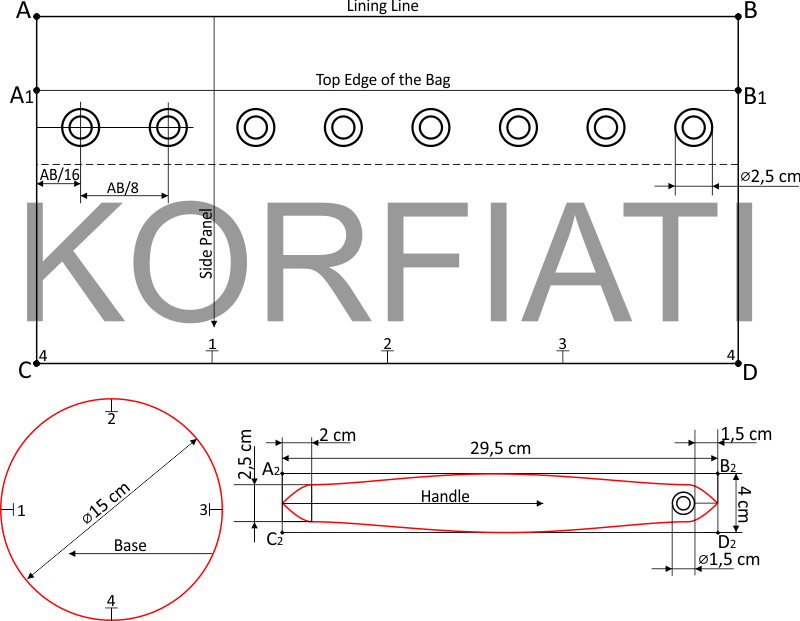
Fig. 2. Bucket bag pattern – side panel, base, and handle
Materials & Notions
- Approx. 0.3 m of satin (110 cm wide)
- 0.25 m of lining fabric
- Approx. 0.3 m of fusible interfacing (heavyweight)
- Approx. 0.3 m of hair canvas (buckram) or stiff sew-in interfacing
- 0.3 m of double-sided fusible web (Bondaweb/Vliesofix)
- A 15 cm diameter circle of heavy cardboard for the base
- 8 eyelets (approx. 2.5 cm diameter)
- 2 eyelets for the handle (approx. 1.5 cm diameter)
- 2 metal round carabiner rings (approx. 4 cm diameter)
- 1 metal chain (approx. 65 cm long)
- 2 cord ends (stoppers)
- Madeira Aerofil No. 120 sewing thread.
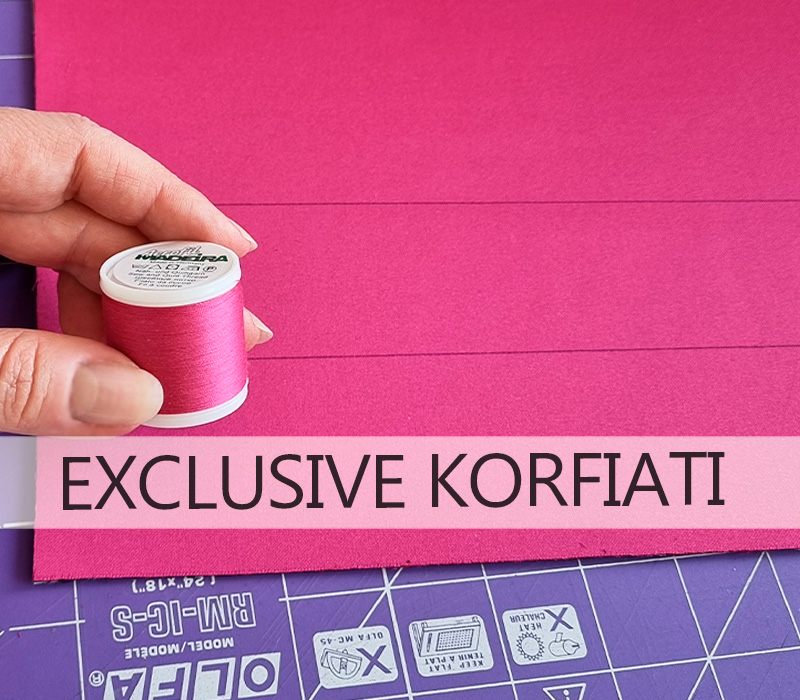
Fig. 3. Perfectly matched thread is the mark of a high-quality finish
Recommended reading on working with stabilizers: How to interface and stabilize the side panel, base, and handle
To contents ▴Cutting Instructions
From the main fabric, cut:
- Side Panel – 1 pc
- Base – 1 pc
- Handle – 2 pcs
Add 2 cm seam allowances to all sides when cutting. Excess allowance will be trimmed during assembly.
From the lining fabric, cut:
- Side Panel (minus the integrated facing) – 1 pc
- Base – 1 pc
Interface the main side panel, base, and both handle pieces. Create a “sandwich” using the double-sided fusible web:
- Satin layer
- Fusible interfacing
- Double-sided fusible web
- Hair canvas / Buckram.
Sewing Instructions
Fuse the rectangular layers (side panel) as described above. Using a ruler and a rotary cutter, trim the seam allowances to 1 cm. Sew the vertical back seam to create a cylinder. Press the seam allowances open and use a tailor’s board for a flat finish.
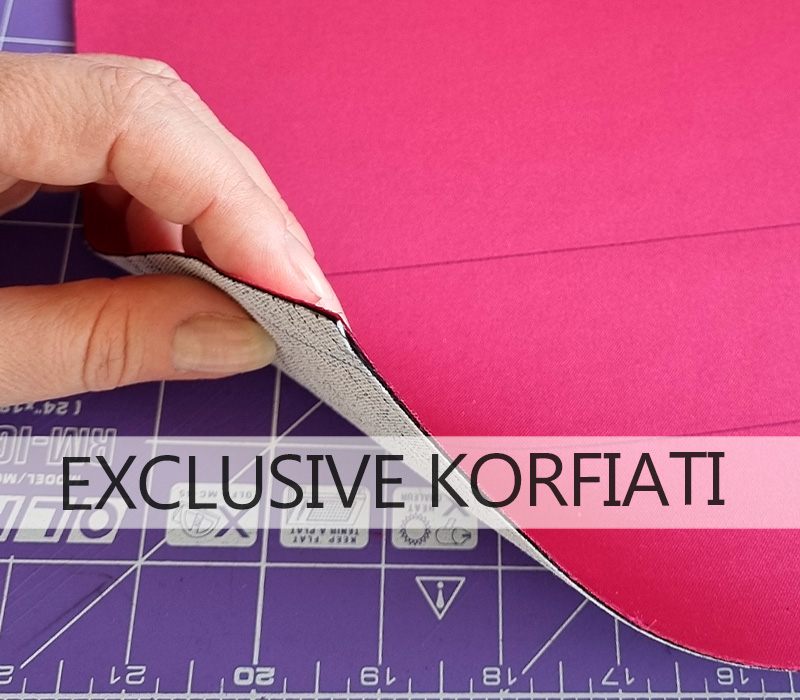
Fig. 4. The completed “sandwich” of main fabric and stabilizers
Sew the back seam of the lining and press open. Stitch the lining to the bottom edge of the integrated top facing. Press both seam allowances upward, then fold the facing down (wrong sides together) and press. Topstitch along the lining seam and the top edge of the bag.

Fig. 5. Topstitching the lining join and the upper edge
Place the cardboard circle onto the stabilized base (canvas side), cover with the lining, and baste/stitch around the perimeter (use a zipper foot or open-toe foot). Trim allowances to 0.5 cm.
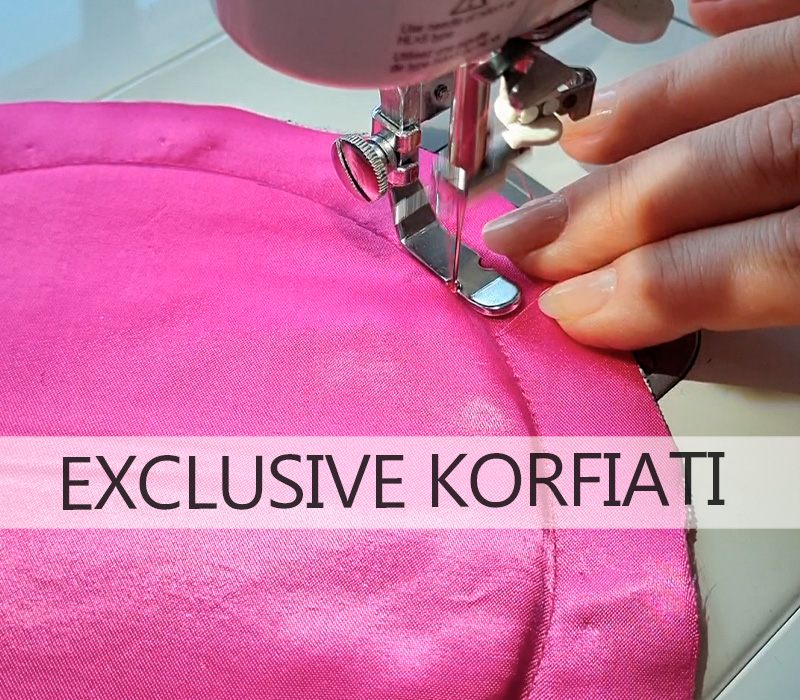
Fig. 6. Preparing the base – view from the lining side
Trim the lower seam allowance of the cylindrical side panel to 0.5 cm. Sew the base to the side panel, matching notches 1-2-3-4. Use a zipper foot for precision.

Fig. 7. Joining the base to the side panel
Finish the interior raw edges around the base with bias binding. We finished these by hand.

Fig. 8. View of the bound internal seam around the base
Sew a 0.5 cm wide fabric tube (rouleau) and weave it through the metal chain. Install cord ends on the fabric tips.
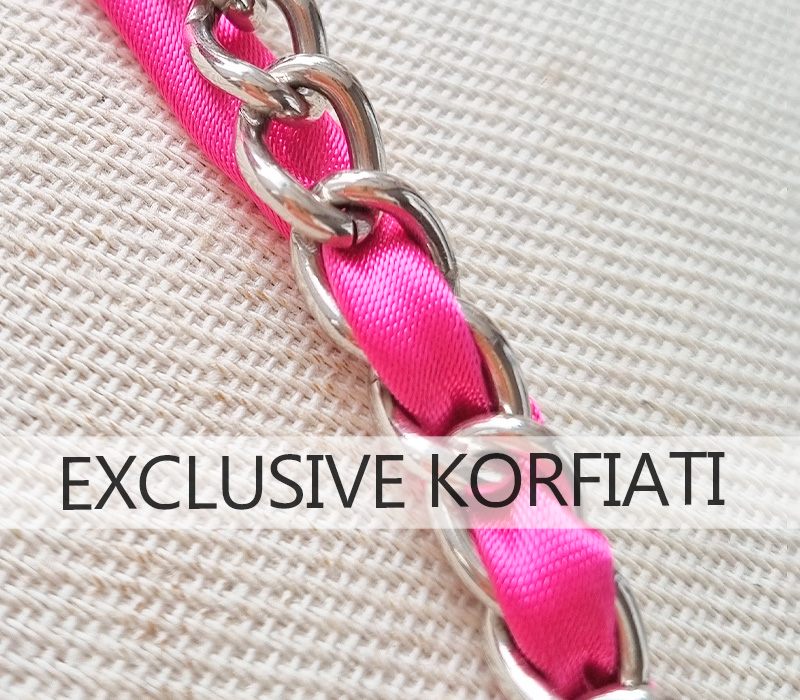
Fig. 9. Weaving fabric through the chain for a custom look
Install the eyelets following your markings. Thread the chain through the eyelets and secure it with a cord lock.
Pro Tip! You can purchase a cord lock at any notions store or make your own using elastic cord and metal beads.
To contents ▴Making the Handle
Important! When making the handle, cut the stabilizer layers exactly to the template size WITHOUT seam allowances.
Interface each main fabric handle piece. Use fusible web to attach the hair canvas. Trim the main fabric allowances to 1 cm, clipping curves where necessary. Fold the allowances over the canvas and fuse in place using hem tape (Stitch Witchery) or textile glue (test on a scrap first).
Place the handle pieces wrong sides together and topstitch around the perimeter. This stitch serves both as construction and decoration. Install the eyelets on the handle as marked.
Clip the handle to the bag using the round carabiner rings. Your bag is ready!

Fig. 10. The finished bucket bag
Find even more patterns and creative inspiration at the Anastasia Korfiati Sewing School. Subscribe to our free newsletter to be the first to receive new patterns!
You might be interested in:
- Faux Fur Teddy Bag Pattern
- Fur-Trimmed Jacket Pattern
- Womens trousers with an elastic waistband
- Quilted Crossbody Bag Pattern